
Geofencing marketing in two sentences
Geofencing marketing is a way to reach people based on a place they visit, which suits businesses whose customers gather in predictable spots. It is weaker at reading intent, less precise than many people assume, and restricted around health care sites in some states.
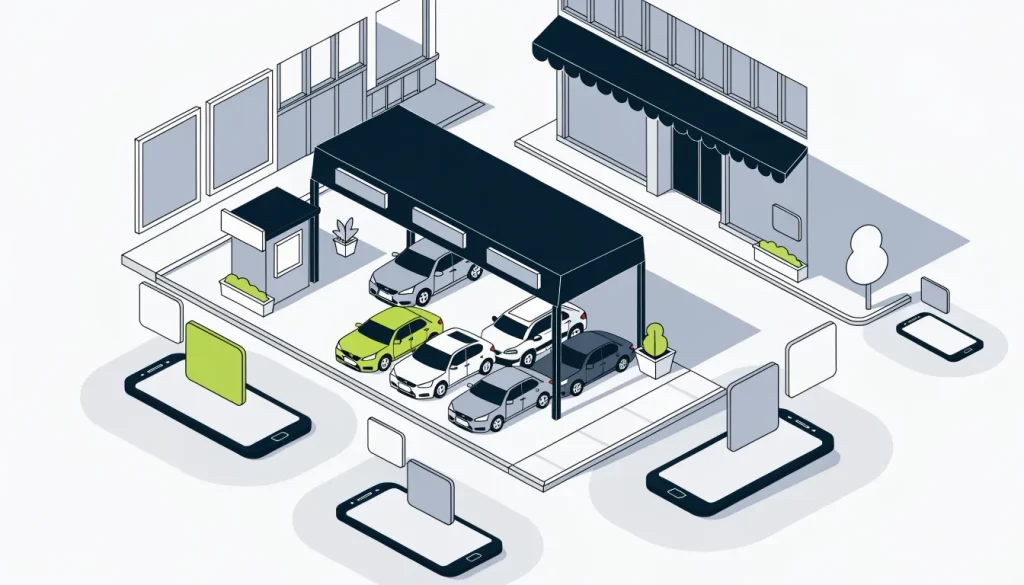
That verdict rests on how the method works. Geofencing marketing means placing ads in front of devices that a vendor’s data shows inside a virtual boundary. The FTC described it as a virtual fence around a point of interest, with an example ad sent to someone within 200 meters of a pharmacy.
The comparison that follows sets it against two other ways of reaching nearby customers. The aim is to show where each one fits, not to pick a winner.
Place, intent and app alerts side by side
Local businesses usually choose between three ways of reaching nearby people. They can target a place with a geofence, target typed intent with search ads, or send alerts through their own app. The table compares them on the points that tend to matter most.
| Question | Place-based geofence ads | Search ads with local terms | Alerts in a business’s own app |
|---|---|---|---|
| What starts the ad | A device seen inside a boundary | Keywords a person types | A customer’s phone crossing a fence |
| Who is reached | Anyone the vendor places there | People actively looking | Only people who installed the app |
| What it reveals | Where someone was | What someone wants now | Arrival, exit or a long stay |
| Main limit | Location error and vague intent | Only reaches active searchers | Needs installs and location permission |
| Typical use | Competitor lots, venues, a dealership area | Service queries naming a town | Loyalty offers and reminders |
Search ads are triggered by the keywords a user types, so they target intent. Advertisers can add location words, such as “replacement windows Trenton.” That approach reaches people who have already said what they want.
Place-based ads work the other way round. The advertiser anchors the campaign to a ZIP code, an address, a set of coordinates or an IP range. Reference sources point to rival stores and the wide area around a car lot as typical choices.
The details of how geofence ads work, from bidding to delivery, are covered in Part 1 of this series. Part 4 sets geofencing against search advertising at more length.
Why place and intent behave differently
The difference comes down to the signal each method reads. A geofence reads a device’s estimated position, while a search ad reads words typed by a person. Position says where someone was, and words say what someone wants.
What a position signal can tell
A position is a strong hint but not a statement of interest. A phone inside a fence around a hardware store might belong to a shopper, a delivery driver or someone cutting through the lot. The ad system cannot tell them apart from location alone.
Position also carries error. Wi-Fi location is typically accurate to 20–50 m, according to Android guidance. Without Wi-Fi, such as on a rural drive, accuracy can fall to several hundred meters or several kilometers.
That error is why Google recommends a geofence radius of at least 100 to 150 meters on Android. In a busy commercial strip, a fence of that size can cover several neighboring stores.
How visits are counted
Measurement is part of the appeal. A vendor can follow phones that were shown an ad and see whether they later came into a showroom. The industry calls this walk-in attribution.
The method has a weak spot. No official source shows how accurate foot-traffic attribution is or what store-visit lift is typical. Visit counts from a vendor are estimates built on the same uncertain location data.
Where the data comes from
The location data behind these ads usually comes from apps on people’s phones. The FTC alleged that InMarket used app location data to learn when a consumer arrived at a place, how long they stayed and when they left. The company then matched that data to points of interest.
That case shows how much a stream of visits can reveal.
The basics of what geofencing is, including fence shapes and triggers, sit in a separate guide. A business buying geofence ads should ask a vendor where its data comes from and what consent sits behind it. Those answers vary from one vendor to the next.
How search intent differs
A search ad needs no location fix to show intent. The words do that work, and a location keyword narrows the place. The trade-off is reach, because the ad appears only when someone searches.
When geofencing marketing fits and when it does not
Geofencing marketing fits when a business’s likely customers gather at known places and the business can wait for a response. It fits poorly when the target area is tiny, when the site is health related, or when immediate intent matters more than location. Each case below shows why.
Situations where it tends to fit
Reaching people near a competitor. Competitor locations are a standard example in reference sources. The idea is to reach shoppers who are already comparing options in person.
Covering a wide sales area. A car dealership might fence a few square miles around its lot. A large fence absorbs location error more easily than a small one.
Following up after a visit. Ads can reach devices that were seen at a venue or event earlier. The offer does not need to land at the exact moment of the visit.
Situations where it tends not to fit
Tiny fences in dense areas. Below roughly 100 to 150 meters, the boundary is smaller than the margin of error in the phone’s position. The ad may reach the business next door as often as the target.
Anything near health care. Washington state law stops businesses from fencing in-person care providers for tracking, health data collection or related advertising. In New York, a company may not fence another party’s care facility for ads, profiles or health guesses.
The New York law treats any radius of 1,850 feet or less as a geofence. Businesses in the health field, or near one, should get legal advice before using place-based ads. This guide is not legal advice.
Offers that depend on perfect timing. On Android, geofence alerts usually arrive within about 2 minutes and can take longer. A message meant to greet someone at the door may arrive late.
Uses that could look like unfair pricing. In April 2022, Target agreed to a $5 million settlement with the San Diego City Attorney. The office had claimed the retailer used fences to charge higher prices once shoppers were inside its stores.
What to weigh before spending
Before spending, a business can weigh three questions.
First, do customers gather at places that can be named and mapped? Second, is a delayed response acceptable? Third, does the vendor explain its data sources, its fence sizes and its visit-counting method?
If the answer to all three is yes, geofencing marketing is a reasonable test. If not, intent-based or owned-channel methods may suit better. No method can promise foot traffic or a return.
Questions to ask a vendor
A vendor conversation is easier with a short list. Ask how the fence is drawn, whether as a circle or a polygon, and what radius is used. Ask whether ads are shown during the visit or afterward.
Ask how a visit is counted and what share of devices the counts are based on. Ask whether any target places are health related. The answers show how much of a campaign rests on estimates.
Frequently asked questions
Which is an example of geofencing marketing?
A car dealership drawing a boundary a few square miles around its lot and showing ads to phones inside it is a common example. Another is placing ads on phones seen at a competitor’s location.
Can geofencing marketing promise more store visits?
No method can promise foot traffic or a return on spending. Published official sources give no figure for the usual lift in store visits. Vendor visit counts are estimates built on imperfect location data.
Where does the location data for geofence ads come from?
It usually comes from apps on people’s phones that collect location. The FTC alleged that one data company, InMarket, used app data to learn when people arrived at places and left. Asking a vendor about its sources and consent is a sensible first step.
Is Google still doing geofence warrants?
Google moved Location History storage to users’ devices in July 2025. As stated in a June 2026 Supreme Court opinion, Google says it can no longer respond to geofence warrants for that data.
Next stops in the geofence hub
The geofence hub gathers every guide on virtual perimeters in one place. It covers the definition, the mechanics behind alerts, and how marketers and police use fences in very different ways. Browse the full set at geofences explained.