
Nextdoor advertising in two sentences
Nextdoor advertising suits a business that wants to reach verified residents of specific neighborhoods, especially homeowners, parents or recent movers. It adds reach beyond the free tools, but it cannot buy the neighbor recommendations that carry the most trust on the platform.
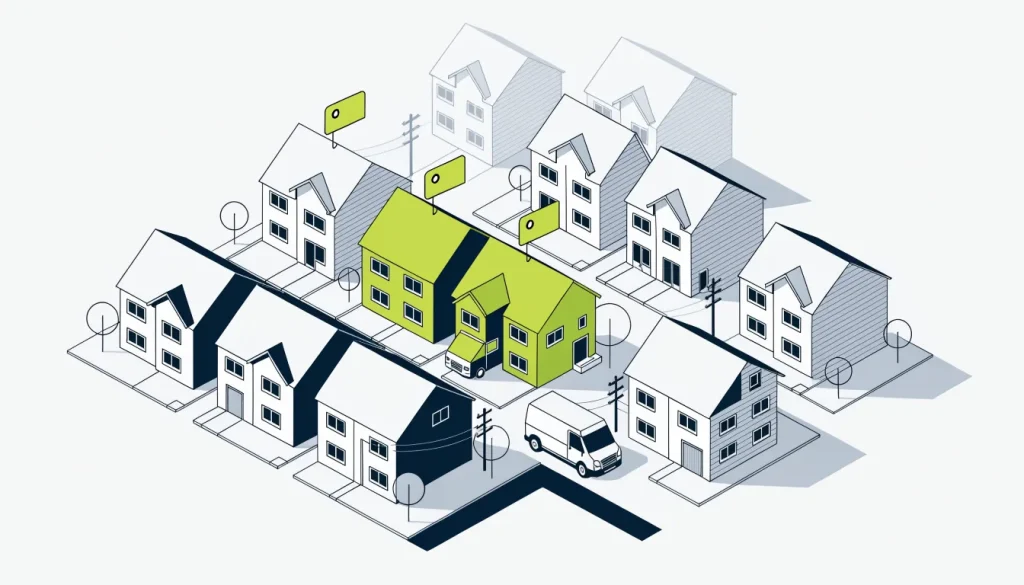
That verdict rests on how Nextdoor is built. Each member signs up under a real name at a real home address, and the platform checks that location. Ads therefore land in front of people whose neighborhood is known, which is the main thing that sets the platform apart.
Advertising is not new to Nextdoor. The platform launched in 2011, and advertising began in 2016. The comparison below sets paid ads beside the free options a business already has.
Paid ads, Local Deals and free tools compared
A local business on Nextdoor has three main ways to reach neighbors: paid ads, Local Deals, and the free page with its posts and recommendations. Each differs in cost, reach and how much trust it carries. The table sets the three side by side.
| Factor | Paid ads | Local Deals | Free page and posts |
|---|---|---|---|
| Cost | Paid | Paid | Free |
| Reach | Neighbors up to 30 miles away | Chosen neighborhoods and ZIP codes | Neighbors within two miles in the US |
| Targeting | Neighborhood, interests and behavior | Neighborhoods and ZIP codes | Nearby neighbors only |
| Source of trust | The advertiser’s message | The value of the discount | Neighbor recommendations |
| Measurement | Pixel and API conversions, foot-traffic studies | Not described in public sources | Recommendations and Faves |
Its ad formats include sponsored posts, native display, video and lead-gen forms. The lead form collects a neighbor’s contact details inside the app. Native display is an ad styled to match the content around it, and Part 1 of this series covers the Nextdoor ad formats one by one.
Local Deals launched October 8, 2019. Each deal offers a discount to the neighborhoods a business picks, and shoppers can use it in store or on the web. Neighbors can save a deal before it expires.
The free page is the base layer. Business Pages are free, and neighbors recommend a business by tagging it or writing on its page. In the US, free Business Posts are limited to twice per month, under a guide updated July 2023.
Why paid reach and neighbor trust behave differently
Paid reach and neighbor trust behave differently because they come from different sources. An ad is a message the business pays to place. A recommendation is a neighbor’s own word, offered without payment.
What the advertiser controls
With paid formats, the business chooses who sees the message. Campaigns can be narrowed by neighborhood, by stated interests and by what people do offline. The neighborhood graph, which maps verified members to where they live, lets advertisers reach homeowners, parents and recent movers.
Reach can stretch further than free posts. A paid campaign can extend as far as 30 miles from the business. A free US Business Post, by contrast, reaches neighbors within two miles.
Buying is flexible. A business can run campaigns itself in Nextdoor Ads Manager or work with the company’s sales staff. Self-serve means the business sets up and runs campaigns itself.
What the advertiser does not control
Recommendations sit outside the ad system. They come from neighbors, while ads are paid formats. A business cannot buy, remove or be assured of recommendations through advertising.
Visibility also has limits. No ad or post reaches every household. The Feed is ranked with AI and machine learning, so what each neighbor sees depends on the ranking.
How results are measured
Measurement on Nextdoor includes pixel and API conversions and foot-traffic studies. A pixel is a small piece of code on the business’s website that reports actions after an ad click. An API conversion sends the same kind of report straight from the business’s systems.
Foot-traffic studies estimate store visits after ads. As with any location measurement, these are estimates rather than counts of named people. The underlying method was not set out in the sources behind this guide.
How the platform’s history shapes trust
The network’s value to advertisers comes from its verified neighbors, and an outline of what Nextdoor is explains how that verification works. Outside providers confirm each neighbor through email, text messages, calls, device location or a mailed invite.
Criticism is part of the record too. Since 2015, critics have described users racially profiling neighbors in posts. In 2020 the company dropped a tool that let members forward posts to police.
When Nextdoor advertising matters and when it does not
Nextdoor advertising matters most for businesses whose customers live in particular neighborhoods and are reachable through home life. It matters less where the audience is thin, where the free tools already do the job, or where the business relies on reputation more than reach. The cases below show the difference.
Cases where paid reach tends to help
Home services in town and suburb. A roofer, gardener or cleaner serves households in known areas. Targeting homeowners in chosen neighborhoods fits that pattern.
Businesses chasing new arrivals. Recent movers need dentists, gyms and repair services. The neighborhood graph lets advertisers reach that group directly.
A wider service area than free posts cover. Free US posts reach two miles. A business serving a larger area can pay to extend its reach toward 30 miles.
Short-term offers. A Local Deal promotes a discount to chosen neighborhoods and ZIP codes. Neighbors can save it and redeem it online or in person.
Cases where paid reach adds less
Rural areas. Pew found 2% of rural adults used Nextdoor, against 17% of urban adults and 14% of suburban adults. A rural business may find a small audience to advertise to.
Businesses already recommended often. When neighbors regularly tag a business, the free page may already bring steady interest. Paid reach adds to that, but it does not replace it.
Businesses with service problems. Ads can bring attention, but they cannot change what neighbors say in threads. Fixing the service usually does more than raising the ad budget.
Owners expecting a set price. Nextdoor’s public pages used for this guide do not give current ad prices. Costs should be checked in Ads Manager or with the sales team.
How a small campaign might run
Picture a pest control company serving several suburbs. Neighbors already tag it in threads about ants and wasps, so its free page draws steady interest. The owner wants to reach recent movers who have not yet asked anyone.
A sponsored post aimed at recent movers in those suburbs fits that goal. A Local Deal with a first-visit discount could run alongside it. The free page keeps collecting recommendations whether or not the ads run.
The owner then compares enquiries during the campaign with the weeks before it. If calls rise mainly from the targeted suburbs, the paid reach is doing its job. If not, the offer or the audience may need to change.
Questions to settle before spending
Three questions help decide. First, do likely customers live in towns or suburbs where Nextdoor is used? Second, is the free page complete, verified and active?
Third, is there a clear offer for a specific group, such as new movers or homeowners? If all three answers are yes, a small test is reasonable. Results should be judged on real enquiries, not only on reported reach.
Frequently asked questions
Can I advertise on Nextdoor?
Yes. A business can buy sponsored posts, lead-gen forms, display, video and Local Deals. It can manage them itself in Ads Manager or buy with help from Nextdoor’s sales team.
How much does it cost to advertise on Nextdoor?
The sources used for this guide do not give current Nextdoor ad prices. Business Pages are free, while ads and Local Deals are paid. Current costs can be checked in Nextdoor Ads Manager or with its sales team.
Is it worth advertising on Nextdoor?
It depends on where customers live and what the business sells. Nextdoor use is higher in urban and suburban areas than rural ones, according to Pew. Ads add reach, but they cannot buy the neighbor recommendations that carry the most trust.
Does anyone use Nextdoor anymore?
Nextdoor reported 21.0 million weekly active users on the platform as of December 31, 2025. Its filing put its reach at 1 in 3 US households, across more than 350,000 neighborhoods in 11 countries.
What is the Nextdoor app controversy?
The main controversy concerns reports of racial profiling by users, raised by critics since 2015. Nextdoor removed its “forward to police” feature in 2020.
More guides in the Nextdoor hub
This guide covers paid reach on Nextdoor. The hub also explains how neighbors are verified, how the Feed ranks posts, and how a free page earns recommendations. The full set is listed at Nextdoor explained.